How Meta, Google and TikTok took targeting off the table, why creative supply became the constraint, and the six phase system we run against it.
Targeting is no longer where the advantage lives. Meta, Google and TikTok have converged on the same approach: the platform decides who sees your ad, in real time, by reading how people respond to the creative rather than the audience you picked. Interests, lookalikes and placements all still exist. They are just no longer the lever.
Meta's version is called Andromeda. It runs on NVIDIA Grace Hopper hardware and raised the capacity of its ad retrieval model 10,000x, narrowing tens of millions of ad candidates down to a few thousand and matching creative directly to live behavior. The name is not the point. What it replaced is: account configuration used to be the work, and now it is largely handled for you.
So performance no longer separates on how well an account is built. It separates on what gets fed into it.
Here is the part most teams miss. Platforms scale a winning ad faster than most teams can produce its replacement. When that gap shows up as inconsistent performance it gets diagnosed as a targeting problem or a platform problem. Most of the time it is a supply problem: the creative pipeline cannot keep pace with how fast the platform wants to move.
None of this is our observation. It is how the platforms are built, and it is documented by the people who built them. Operators who spend their days inside these accounts, watching it happen from the account side rather than a slide deck, land in the same place and put it more bluntly.

This is where you now make all the money on Meta.
His read is blunt: most operators are simply bad at creative, which is exactly what makes it the highest leverage place to compete right now.
The Herd Creative Operating System is how we keep production, and the strategy and concepts behind it, moving fast enough to hold performance as spend scales. The goal is not more ads. It is pushing back the point where diminishing returns start.
That is the shift, and it plays out in three parts: creative is the new targeting signal, winning creative has a shelf life, and most teams are not built to keep up.
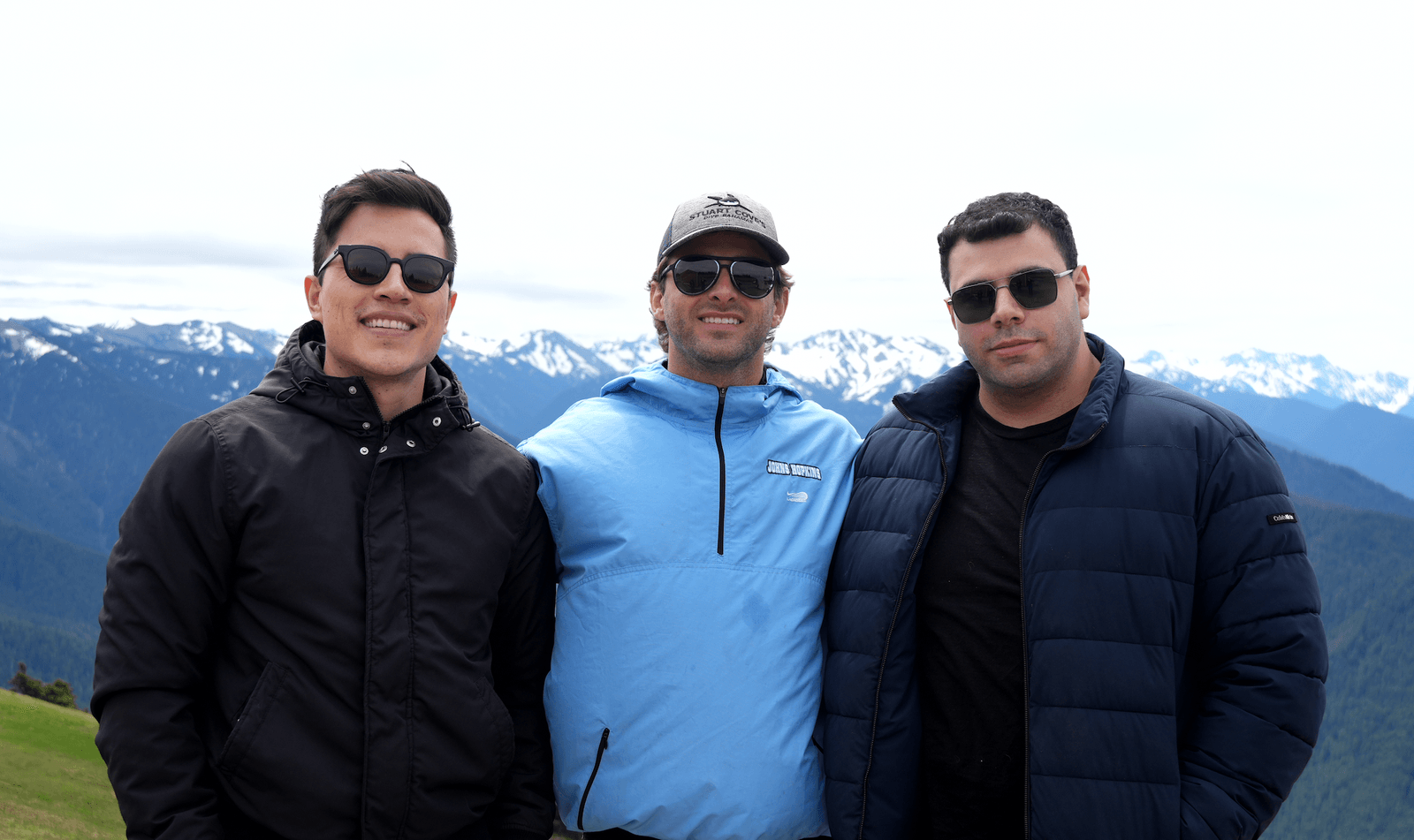
Kyle leads creative strategy, from ICP research through the concepts that get built. Kris runs production, keeping throughput high enough to replace winners before they fatigue. Elie leads growth and partnerships.
Behind the three of us is a US based editing and production team. We make the ads, build the strategy behind them, and read what comes back with your team.
Book a Strategy CallThree moves. Creative is the new targeting signal, winning creative has a shelf life, and most teams are not built to keep up with the pace.
Targeting used to work like this: you picked an interest, say pets, and built creative to match it. The problem was that one interest label never captured what actually predicts a buyer. Age, psychographics, the dozen other signals sitting underneath the label, none of that was in the word pets.
Andromeda flips it. Creative goes in with no targeting attached, and the system reads the creative itself, the visuals, the pacing, the copy, to find who responds to it.
That changes what creative variety is. It is not a nice to have. It is the raw material the algorithm uses to find your audience in the first place.
Operators consistently see near identical ads behave as one. The copy gets grouped with the original and competes for the same reach instead of adding any.
The same ad with a genuinely new hook behaves like a new ad. It earns its own audience, even though the body underneath barely changed.
That is why frequency climbs and reach shrinks even when nothing about your offer changed. The system keeps re-serving what it has already grouped together. Rotating hooks is not a small tweak. It is a real, low cost way to stay ahead of it.
Performance rarely collapses all at once. It fatigues first, then erodes.
The pattern goes like this. A winning ad generates strong signals, so the platform sends it more delivery. Delivery concentrates. Frequency rises. The account leans harder on a shrinking set of creatives. People see the same ad enough times that they stop responding to it. The ad's useful life shortens the faster distribution scales without new creative behind it.
None of this is incidental. It is built into how platform budgeting works: spend flows toward whatever is already winning, which earns that winner even more delivery, precisely because it is winning. Left alone, that concentrates spend into a small slice of your creative.
The mechanism is simple once you see it. Someone's first or second exposure to an ad holds or even slightly raises the odds they respond. By the third or fourth, that likelihood collapses. A genuinely different ad brings it back, and a small variation does not. Platforms are built to keep pushing what is working. They are not built to refresh your creative for you. That part is on the operator.
What looks like volatility usually is not random. It is a timing gap between how fast platforms scale a winner and how fast a team can produce its replacement.
Efficiency over time,
when replacement is late
A winning ad has a useful life. What decides the account is when the next one arrives.
The winner falls below the useful floor and stays there until the next concept climbs back over it. That span is what the account pays for.
Most organizations are not set up to treat creative as the main lever for scaling paid ads, and the reasons go deeper than production capacity.
Winning accounts produce at a volume most organizations cannot match.
Production gets treated as a cost to cut, not the input driving the return.
Most organizations lack the system to generate, test and replace creative at the speed platforms require.
Creative now shapes the actual signals the platform uses to decide who sees what: who responds, what signal that generates, how distribution unfolds from there. You can see the pattern in how modern scaled advertisers operate. Hims, the direct to consumer men's health brand, did not win on a handful of hero ads. It scaled through structured creative variation across messages, formats and buyer states, and you can see the whole library yourself. The brand is not the point. The pattern is.
The scale of what winning operators actually produce might surprise you. Most organizations are not built for that pace: slower production cycles, long approval chains, and a handful of hero assets asked to carry performance longer than they realistically can. That gap is structural, not incidental. When replacement arrives too slowly, CAC rises, revenue efficiency softens and margin compresses.
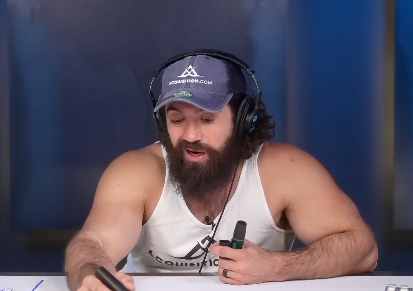
We're putting out 250 per day. We're at 1,500 per week and you're at 5.
This capacity problem is not an accident, it is an accounting problem. Most businesses track ad spend as the thing driving revenue and file creative production under overhead, something to trim rather than invest in. That is backwards. The platform is a distribution layer and it scales whatever creative you hand it. Creative is the actual input generating the return. Cut production first, the creative goes stale, and the performance drop gets blamed on targeting or the platform instead of on what caused it.
The real problem was never that a team needs more assets. It is the operating structure, and the mindset behind it, that is missing. Without it, performance stays fragile no matter how big the budget is.
We did not build this system in a vacuum. Before we formalized the Creative Operating System we spent real time studying experienced media buyers who live inside these platform shifts daily. That is a different vantage point than ours and it is worth listening to.
Here is what stood out. Ask an experienced buyer what actually predicts whether a piece of creative works, and the honest ones will tell you most testing in this industry runs backwards. Format gets tested first, because it is the easiest thing to swap. Persona comes next. Angle, the argument the ad makes against a belief, barely gets touched, because it is the hardest thing to isolate and the easiest to leave alone.
That order is exactly wrong. If a persona has already proven they will buy and performance drops, the fix is almost never the format. It is the message. Testing in the wrong order does not just waste budget, it produces no learning, because you are changing the variable least likely to be the problem.
Three things have to be true at once to keep creative supply ahead of fatigue.
Not only a studio built for every ad. The systems, the experience and the vendor network that make volume affordable and fast, without the quality dropping.
Research finds one named person and the belief that has to change, in their own words.
A verdict per concept against a rule set defined before the batch launches, not after the numbers land.
Most of the market has one of the three. The production companies with the studio take the brief as given. The agencies with the frameworks outsource the capture. The buyers who can read the account do not make the ads. The Herd runs all three as one loop.
We do not buy your media and we do not need your ad account. Your numbers, your data and your existing strategy are the input. Your numbers set the bar, we produce against it, and we tell you what cleared. Media buying, financial monitoring and the pages people land on stay with you or the vendor you already have, and if that seat is still open we can point you toward people we trust rather than claiming it ourselves.
You do not have to take our word for any of it before committing to execution. The five minute diagnostic shows where your creative system stands, and the thirty minute session builds a written strategy for your account, so you can see the thinking and decide whether it is worth acting on before any money changes hands.
5 min ad diagnosticThere is a version of this industry that has leaned hard the other way: sharp frameworks and slide decks, with production treated as the easy part, something to generate rather than something to build well. We do not operate that way. AI is a real part of how we work. It accelerates briefing, scripting and parts of production execution. It does not replace the judgment that decides what is worth making, or whether it is any good.
That judgment, and the physical capacity to produce at volume without the quality dropping, comes from a studio built for every ad and a US based team. We use AI to move faster inside that system. We do not use it as a substitute for the system.
 Kris
Production
Kris
Production
Runs production, keeping throughput high enough to replace winners before they fatigue.
 Kyle
Creative Strategy
Kyle
Creative Strategy
Leads creative strategy, from ICP research through the concepts that get built.
 Elie
Growth
Elie
Growth
Leads growth and partnerships, including the media buyers who run the ads we make.
Six phases, each one asking a single question and handing a single output to the next. Part I defined the environment. This is the system built to perform inside it.
The Creative Operating System solves one constraint: modern advertising platforms consume creative faster than most organizations can replace it. When creative supply falls behind, performance deteriorates regardless of spend.
This is not a media plan. It is a production system, with the research that decides what gets made and the verdicts that decide what gets made again.
Six phases, and the sixth feeds the first
 1ICP ResearchWho are we talking to?
 2Advertising ConceptsWhat beliefs do we need our ads to test?
 3Creative ProductionHow do we build testable ideas at scale?
 4Concept TestingHow do we identify winning concepts?
 5Post-Click ContinuityDoes the page keep the promise the ad made?
 6CompoundingWhat does this round teach the next one?
Compounding hands what the round taught back to research, which is what makes it a loop rather than a list.
Everything in this system operates at the creative level. Media spend, account structure and financial performance stay with you or your existing vendor.
The share of net new concepts that reach a winner verdict in testing. The batch health number, read at batch level rather than per ad.
Each concept launches with a hypothesis and decision criteria defined before it runs, measured at the creative level.
The creative level rules that decide when a concept has earned the right to be scaled by you or your media team.
Creative strategy and production sit at the center. Everything else supports them. Concept testing surfaces which ideas earn more budget. Post-Click Continuity protects performance after the click. Together they decide whether the creative engine feeding your paid media is producing reliable signal or drifting toward instability.
1
Who are we talking to?
A structured ICP analysis sets the direction for everything downstream. It starts by identifying and prioritizing the customer segments most worth pursuing, then ranking their pain points by intensity. From there we rank segments by how far past the tolerance threshold their pain sits, not by market size, and map the top pain points for each.
ICP research draws on real signal, not assumption. Five sources, and they are the same five every month:
Stated pain points, directly.
Amazon, Reddit, TikTok comments, wherever an audience is already talking. The language customers use unprompted, usually sharper than anything a survey produces.
What made someone choose not to buy elsewhere often reveals needs your own customers will not voice.
Real reactions to what is actually running, not just to the product.
Which objections actually block a purchase.
Not every pain point carries equal weight. The ones that cross a customer's tolerance threshold, the point where a pain becomes urgent enough to act on rather than just notice, produce meaningfully stronger response.
Say the account sells a sleep supplement. Research might surface three segments with a real pain point each, but not all of them past the point where that pain drives action.
A real pain point, but frustrating rather than urgent. Rarely enough to act on alone.
Already living with a problem urgent enough to be actively searching for a fix.
Same, and with less tolerance for anything that takes weeks to work.
ICP research does not stop once Phase 2 starts. Performance signal from Phase 4 feeds back into it: a persona that keeps underperforming despite angle and format testing is telling you something about prioritization, not just execution. That feedback loop is what closes the system in Phase 6, and it starts here.
2
What beliefs do we need our ads to test?
Ad concepts are not produced randomly. They follow a structure built to refine messaging deliberately rather than stumble into it.
Most buyers are not ready to purchase the moment they see an ad, and most of any market never is at any given moment. So concepts have to span awareness stages instead of leaning on one message: unaware, problem aware, solution aware, product aware, most aware.
Not thinking about the problem category. Has to recognize the problem exists first.
“Most people think their fatigue is caused by stress. In reality, it's often dehydration and electrolyte imbalance.”
Recognizes the problem, does not yet understand the available solutions.
“Three reasons most sleep supplements fail to work.”
Understands solution categories and is comparing approaches.
“Melatonin vs magnesium vs glycine for sleep recovery.”
Knows the product and needs reassurance or validation.
“Why thousands of athletes switched to this hydration formula.”
Ready to act, responds to urgency or a direct offer.
“Get 20% off your first order today.”
Each stage calls for a different kind of ad, but the belief a concept is built to move still has to be chosen deliberately. Concept development runs on four layers:
Who you are talking to, and the belief that has to change. One named person, not a segment.
The argument you make against that belief. Three per persona is the minimum.
One creative idea that carries one angle. Format agnostic.
One concept made native to one format, in one treatment. A video execution, a static execution.
Personas work best when they are specific rather than demographic. "Beekeeper" describes almost no one in particular, and creative built against it comes out generic. "A first time backyard beekeeper who just lost a hive to mites and wants a setup simple enough to keep the next one alive" is a real person you can write directly to. The addressable audience is smaller and the creative is sharper, and it converts better because of it.
Many teams collapse angle and concept into one step. Keeping them separate forces precision: two concepts can share an angle and produce completely different executions, or share a format and carry entirely different angles. Keeping the layers distinct makes testing readable and briefs actionable.
One variable sits outside this on purpose: the offer itself, meaning product, pricing and packaging. That is yours. We build persona and angle work around the offer as it exists, the same way we work from your data everywhere else. If testing points to an offer level opportunity we will flag it, but changing it is your call.
3
How do we build testable ideas at scale?
Phase 3 is where strategy becomes ad inventory. Phase 2's concept map sets direction and production turns it into a steady stream of launch ready creative.
Not every concept needs to be built from scratch. Remaking a proven winner is often the highest leverage thing we can produce and it is consistently undervalued next to the appetite for something new. Iterating on a proven concept's persona, format or hook comes next. Net new concepts are necessary, because the system does not compound without them, and they are also the easiest place to over invest relative to how often they actually win.
That ratio is a deliberate starting point, not a hard rule. It shifts as an account matures and its win rate becomes clearer.
Every concept gets executed in multiple formats, chosen to fit the audience rather than brand preference. Older demographics often respond to editorial, traditional formats; younger audiences to high contrast, native style creative. Meta reinforces this mechanically: a format someone has never engaged with will not get served to them regardless of targeting, so format is a real constraint on reach and not just a creative preference.
Format selection follows a sequence, and the order is the point.
Define what the ad has to say before anything about how it looks.
If the buyer has to learn something to want it, the format has to carry the teaching.
A value proposition that lands in a single image does not need a video to say it.
If the product has to be seen working, that decides the format on its own.
The rung the concept is built for is the last check, not the first.
This is not a preference for video because it feels premium. Statics hold real weight at every awareness stage when the concept calls for it.
Production covers shoot day planning and logistics, raw footage capture and direct response editing, multiple variations per concept across static and video including hook variation, and monthly batches sized to how fast the account actually consumes new creative. It runs through a network of studio and set partners, and every other vendor the work requires, based in Miami. You can come to us, ship product to us, or we can come to you, though that last option is the least efficient of the three.
The deeper toolkit, hook to body resourcing ratios, format specific tactics, lives in our internal production SOPs. What matters here is the operating philosophy driving them.
4
How do we identify winning concepts?
Concepts enter testing in parallel. Each one launches with four things defined up front: a hypothesis tied to a specific belief tension from Phase 2, a controlled testing budget sized to produce a real decision, a decision window for when signal gets read, and qualification criteria tied to the financial guardrails you provide. Those numbers come from your P&L. We test against them, we do not set them.
The goal in testing is not maximizing early performance. It is finding out which concepts have actually earned real signal. The primary metric is Creative Win Rate. A healthy rate means the upstream work is functioning. A falling one signals a problem before media spend amplifies it.
Still inside its decision window. No verdict yet.
Holds inside your CAC ceiling, sustains efficiency as exposure expands, and protects contribution margin. All three, read here in testing.
Spent a defined multiple of your CAC ceiling without converting, or converted outside the ceiling with enough spend behind it to be real.
The ad set was disturbed in a way that makes the read untrustworthy. It goes back into the next batch and does not count against Win Rate.
Win Rate gets measured at the batch level, not the single ad level. For clean attribution we recommend structuring each concept into its own ad set: mixing concepts within one ad set makes it impossible to tell which is driving performance. That is a structural recommendation, not something we implement.
Last click attribution misleads by crediting only the final touchpoint. That is a visibility gap as much as a measurement flaw, because platforms optimize delivery around multi touch journeys internally. A top of ladder concept running against a cold audience will rarely show strong last click numbers, and it may be generating the awareness that makes every downstream concept more efficient. Reliability also depends on which level you read: ad level is noisiest, ad set level is more trustworthy, and the level above the ad set is most reliable. The batch level view used for Win Rate sits deliberately at the reliable end.
Two measurement traps worth naming: dynamic product ads often show inflated headline numbers that do not reflect true incremental impact, and raw platform reported return can overstate a concept's real contribution once existing customers and incremental lift are accounted for.
Most concepts will not clear the bar, including ones that look promising early. That is the point of testing: to find out cheaply, before media spend makes the answer expensive.
When a concept underperforms we check in order: angle first, then persona, then format, since format changes least often fix a messaging problem. Offer is flagged separately, since that decision belongs to you.
Once a winner is established we do not ride it until it dies. We set it as baseline and introduce new creative carrying the same message in different formats, hooks and proof styles. The full replacement discipline is covered in Phase 6.
5
Does the page keep the promise the ad made?
Ads introduce a belief. Pages reinforce it.
Continuity is a creative strategy input, not something we build. We need visibility into how the post-click sequence is structured, not control over it. It is built and hosted by you or your existing vendor. Pages reinforce the ad. They do not rewrite it.
When someone clicks an ad they arrive with expectations shaped by the creative they just saw. If the landing experience continues that message, conversion gets more likely. If the message shifts, they have to reassess the offer, and conversion efficiency drops. Three things carry continuity: message alignment, mechanism and proof, and friction reduction.
Because concepts get built across awareness states, the page has to match the awareness level of whoever lands on it. A problem aware ad cannot send someone to a most aware checkout page without losing the audience it just earned.
Retargeting creative should map to the specific reason someone did not convert: price objections get value anchoring, trust objections get social proof, quality doubt gets in-use footage and before and afters, and not ready yet gets educational or lifestyle creative to stay top of mind. Retargeting that does not map to a reason is just repetition.
The output is one written finding per winner. It holds, or it breaks here, with the line that breaks it. You or your vendor fix the page. Phase 6 compounds only winners whose continuity holds, so a break is never counted against the creative.
6
What does this round teach the next one?
By this stage testing has produced measurable signal. This phase is about surfacing it clearly enough for you and your team to make a confident scaling decision.
We do not control when spend increases. That is your call and your media team's, made against your own financial guardrails. What we produce is the creative level signal that makes that call informed instead of a guess.
A winner arrives here already qualified. Phase 4 named it against three conditions, read against your numbers: it holds inside your CAC ceiling, it sustains efficiency as exposure expands, and it protects contribution margin. Creative Win Rate is batch health, not a test any single concept passes.
This phase's own job is replacement, and that starts with understanding why a concept is fatiguing, not just that it is. Sometimes an ad has hit its natural ceiling: it has been shown enough times that repetition, not the message, is the problem, and a fresh execution of the same winning angle solves it. Other times the constraint is the persona itself: a highly specific audience converts well but is small, and no amount of fresh creative raises its ceiling meaningfully. That is the same tradeoff from Phase 2, sharper personas convert better but scale less, and knowing which kind of fatigue you are looking at decides whether the fix is a new hook or a broader persona.
Without structured replacement, distribution concentrates around a shrinking set of winners. Frequency rises. Fatigue accelerates. Acquisition costs climb. With consistent replacement, new concepts enter as older ads decline, and the creative signal stays stable while your team decides how aggressively to scale.
The system does not produce scale on its own. It produces the reliable signal that makes scaling a controlled decision instead of a bet. Compounding, from our side, means two things stay true at once: the creative pipeline stays efficient, and replacement stays ahead of fatigue.
That is the full system. Six phases, feeding back into each other.
What the system produces, and how creative and finance end up speaking the same language about it.
Everything above is the argument. This is the work.
The full library lives on the home page, where you can filter down to the work that looks like yours rather than scrolling past everything that does not. Every ad in it was planned and made by us, from client work.
Marketing and finance speak different languages. Marketing reports in CTR, CPM, hook rate, thumb stop rate. Finance reports in CAC, contribution margin, payback period, LTV. Most creative agencies only speak the first one, which leaves the marketing team standing alone in front of finance every time ad spend has to be defended.
The Creative Operating System runs inside the financial guardrails your business already has. They are captured at the start of the engagement and treated as inputs, not as something we set. Every concept is judged against the same CAC ceiling and contribution margin thresholds that qualify a winner in Phase 4, rather than against platform engagement metrics finance does not trust. And reporting connects creative output to the outcomes finance already tracks, so the decision to scale spend stays yours and your media team's, made with a clearer picture than raw engagement gives.
Marketing keeps creative authority. Finance keeps financial authority. The system makes their decisions legible to each other.
Everything in this document comes back to one sentence.
You can't out-target the algorithm.You can only out-supply it.
5 min ad diagnosticFree, and it runs against your own numbers. No call required to see the thinking.

.svg)